Xpressfly · Mobile App Development
Xpressfly - App like Porter
Xpressfly is a logistics marketplace we built that works the way Porter does: a shipper posts a job, verified carriers see it, and the load gets moved. Where it differs is the pricing model. Instead of a fixed rate set by the platform, carriers bid on each shipment and the shipper picks.
If you are here because you want an app like Porter built, the section below is the useful part. It covers what that product actually contains, which decisions are expensive to reverse, what it costs and how long it takes. We have built this shape of product, so the answers are specific rather than a feature list.
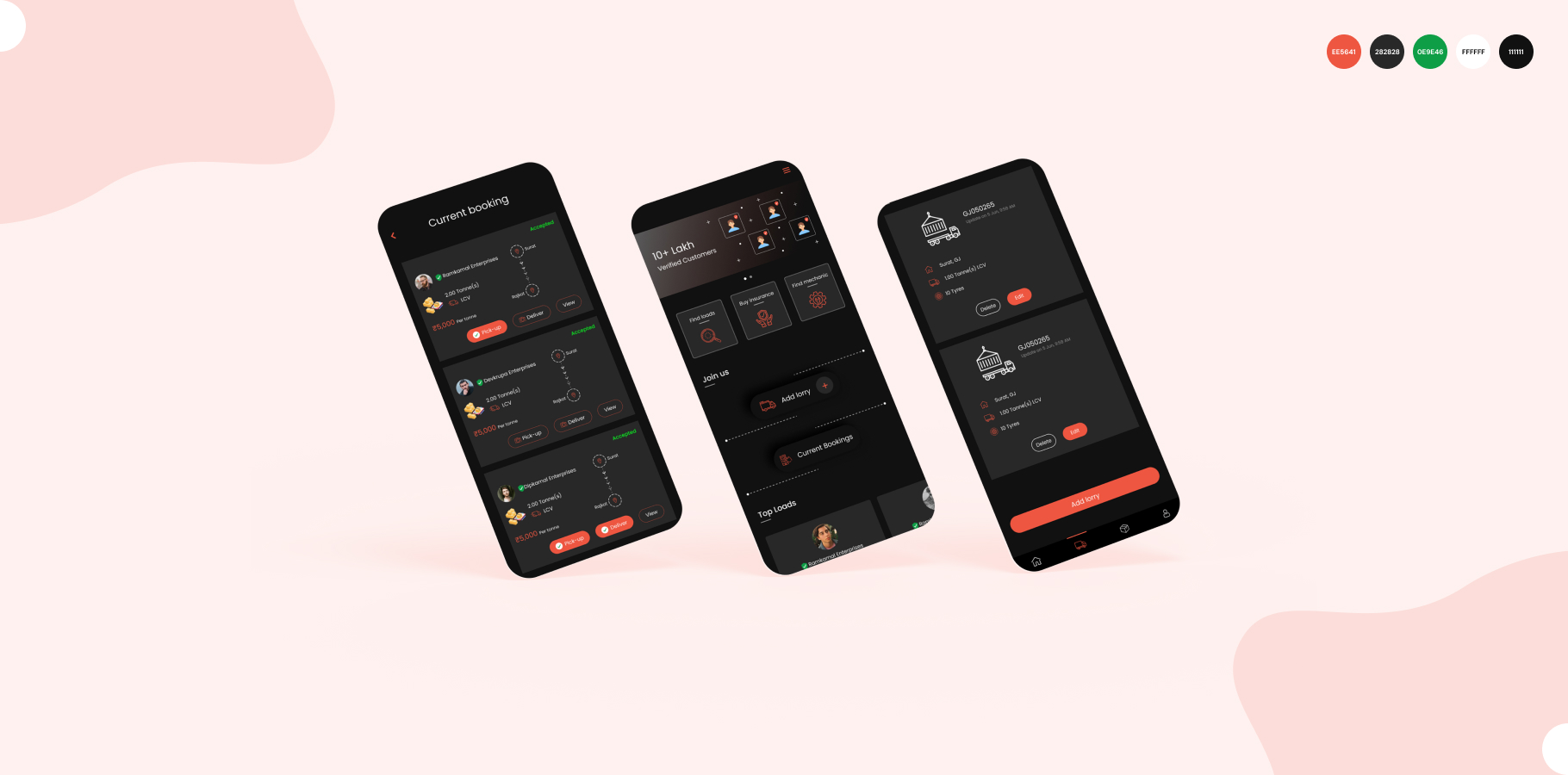
Xpressfly - An app like Porter
+ Frontend : Flutter
+ Backend : Nodejs
+ Database : MongoDB
+ Hosting : AWS
+ 3rd party services : Google Maps, SMS Gateway, Firebase Cloud storage, Aadhar API integration


Customer App
+ Post Your Shipment Easily: With just a few taps, list your shipment details and requirements.
+ Wide Reach: Access a network of verified carriers ready to bid for your delivery job.
+ Competitive Bidding: Receive bids from multiple carriers, ensuring you get the best rates and services.

Admin Panel
+ Manual verification of the customer who sign up
+ Manage accounting,payouts of the truckers
+ Generate reports and analyse the app


What "an app like Porter" actually contains
People describe this as one app. It is at least three, and pricing a build as though it were one is where most estimates go wrong.
- The shipper app. Post a load with pickup, drop, size and timing. See offers. Choose one. Track it. Pay.
- The carrier app. A different product for a different person, used one-handed in a cab. Find nearby jobs, bid, navigate, capture proof of delivery, get paid.
- The operations panel. The part nobody demos and nobody can run the business without: verifying who is allowed on the platform, resolving disputes, and moving money to carriers.
Xpressfly runs on Flutter for the apps with a Node and MongoDB backend on AWS, plus Google Maps, an SMS gateway, Firebase cloud storage and Aadhaar verification. That stack is unremarkable, and it should be. The difficulty in this product is not the technology choice.
Fixed pricing or bidding? Decide this first
This is the decision that shapes everything else, and it is painful to reverse once carriers have habits.
Fixed pricing, which is what Porter does, means the platform quotes a rate and assigns the job. The shipper gets certainty and a two-tap booking. You get a much simpler app. But you now own a pricing engine, and it has to be right across distance, vehicle class, load type, tolls, waiting time and demand. Get it wrong and either shippers leave or carriers refuse jobs.
Competitive bidding, which is what Xpressfly does, means carriers set the price and the shipper chooses. You do not need a pricing engine on day one, and the market finds the rate. The cost is friction: booking is no longer instant, someone has to wait for offers, and you need enough carriers online for the auction to produce a sensible result. It also gives you something more valuable than it looks, which is real price data for every route, so the pricing engine you might build later is grounded rather than guessed.
Neither is correct in the abstract. Bidding suits heterogeneous loads where a fair price genuinely varies. Fixed pricing suits commoditised runs where speed of booking is the product.
Verification decides whether the marketplace works at all
A shipper is handing goods to a stranger. Everything else on the platform depends on that being safe, which makes identity the first real feature rather than a settings screen.
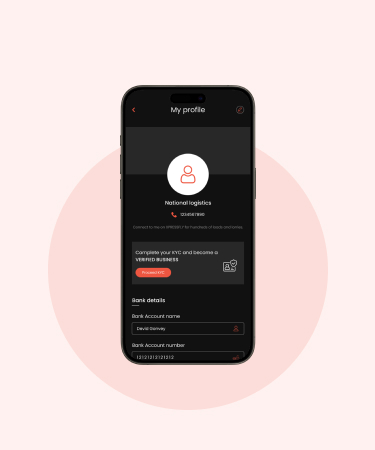
Xpressfly verifies carriers through Aadhaar integration plus a manual review step in the operations panel before an account can take work. The manual step is deliberate. Automated checks catch documents; a person catches the pattern that documents do not show.
Build this as a proper state machine from the first migration. A carrier is applied, in review, verified, suspended or rejected, and every screen has to behave sensibly in each state. Retrofitting it means someone unverified has already taken a job.
Tracking, and the thing nobody budgets for
Live tracking demos beautifully and behaves badly. The problems are all in the real world: the driver's phone throttles background location to save battery, coverage drops in exactly the industrial areas you operate in, and a map pin that freezes for four minutes generates a support call every time.
Budget for the unhappy path. Cache positions locally and reconcile when the connection returns, show the last known position with an honest timestamp rather than a stale pin pretending to be live, and give operations a way to call the driver when the software cannot answer.
Payouts are a second product hiding inside the first
Taking money from shippers is the easy half. Paying carriers is a real system: what is owed, for which completed jobs, minus your commission, with a record everyone can reconcile, and a resolution path when a delivery is disputed.
On Xpressfly this lives in the operations panel alongside accounting and reporting. If you are pricing a build, treat carrier payouts as its own line item rather than a bullet under admin. Our guide to marketplace payment splits covers the architecture in detail, including why holding funds until a job is confirmed changes the design.
What it costs and how long it takes
Three apps, maps, identity verification, bidding and payouts is not an eight-week build, and anyone quoting one has not read the scope.
A realistic first version, meaning one city, one vehicle class, shipper and carrier apps plus an operations panel, sits in our $10,000 to $50,000 mobile range depending on how much of the above you need on day one. The MVP cost guide breaks the arithmetic down feature by feature at our published rate of about $20 per hour for a senior team.
The honest way to spend less is to cut the map, not the trust. Launch in one city with one vehicle type and manual carrier onboarding, and add automation once you know which parts of it you actually need.
When you should not build this
Marketplaces fail on supply, not software. If you cannot get carriers onto the platform before shippers arrive, the app works perfectly and nothing happens on it. Most successful launches in this category start with a manually recruited carrier base in a single city and a founder doing dispatch by phone.
If that is not in place yet, spend the money on supply rather than on features. We would rather tell you that now than build you an empty marketplace.
If it is in place, this is logistics software development and last-mile delivery app development, and it is work we have shipped. A Scoping Sprint is $2,300 and two weeks, and ends with a clickable prototype, an architecture plan and a fixed quote for your version. Or just start a conversation.